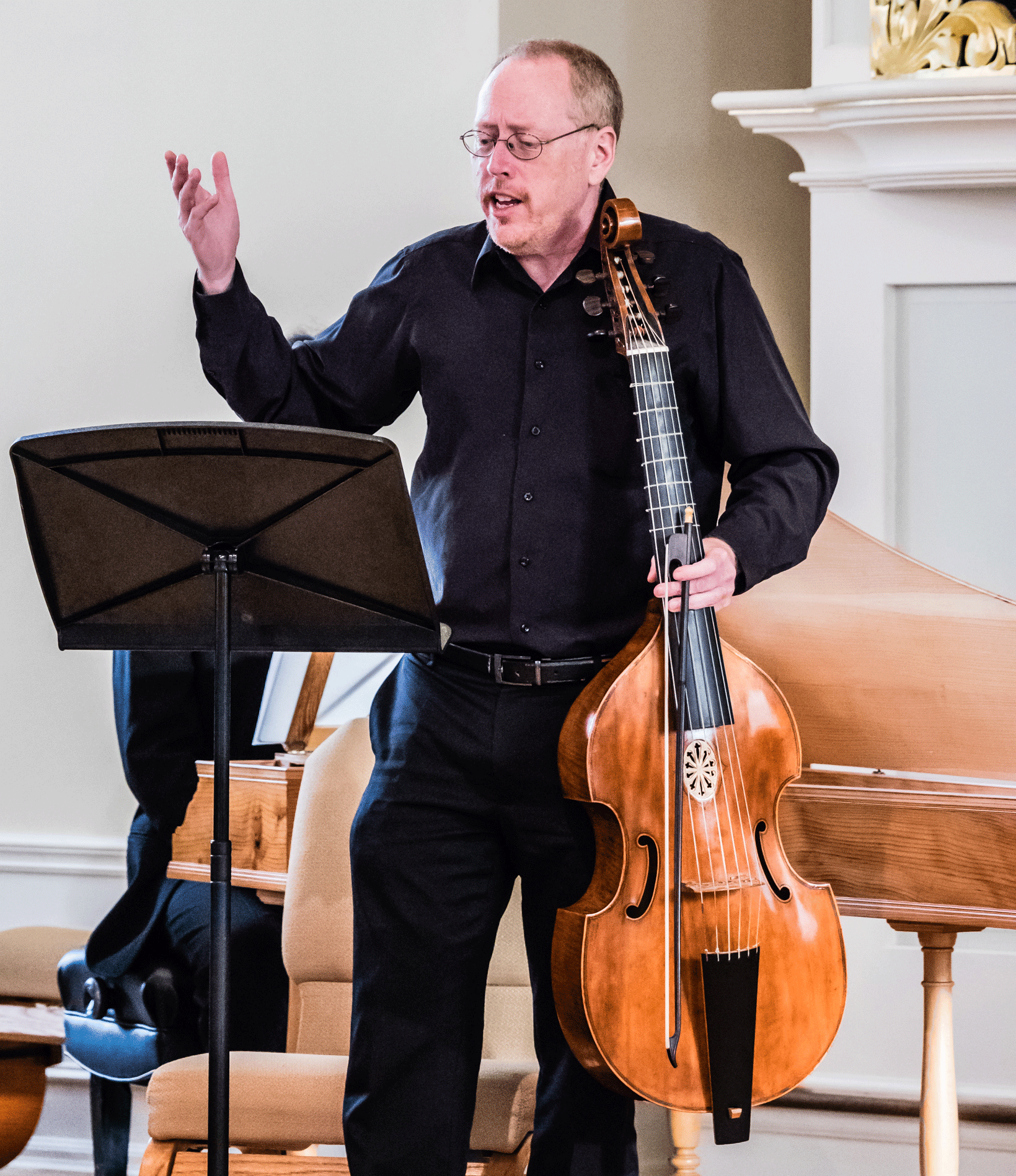
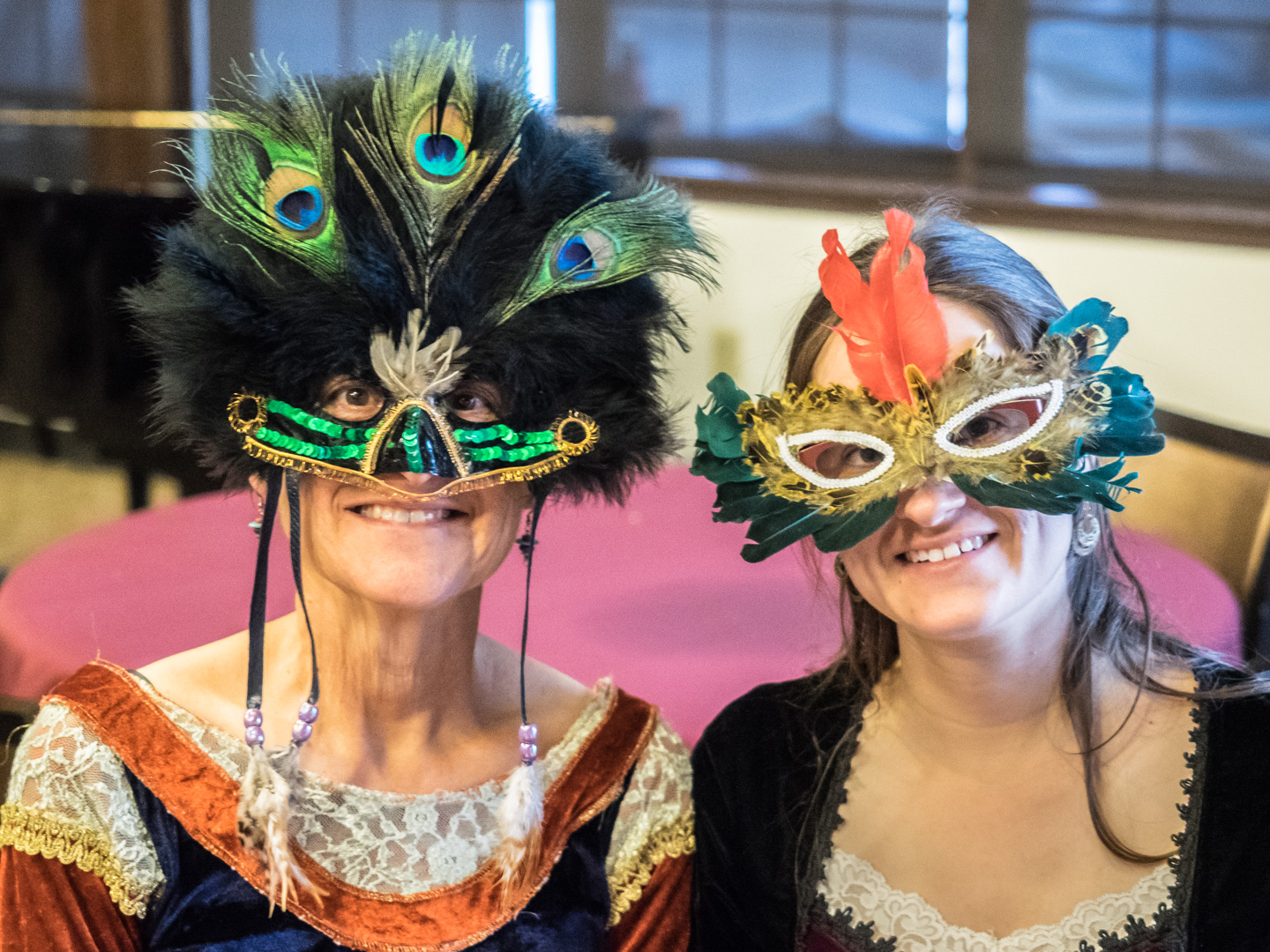
“I was very impressed by how warm-hearted, open-minded, friendly, engaged, generous, and positive everybody was. The sense of community, the love for the music and the skill of organization were truly outstanding.”
 Port Townsend Early Music Workshop July 6–12, 2025
Welcome to the Port Townsend Early Music Workshop 2025. We are delighted to return to the University of Puget Sound’s lovely campus in Tacoma. We have an exciting group of musicians on our faculty and all of us look forward to making music with you.
The program—explore the wonder of music
 The Port Townsend Early Music Workshop serves players of recorders, viols, and percussion, as well as singers. We offer a week-long opportunity for music lovers to immerse themselves in the musical wonders of the Medieval, Renaissance, and Baroque periods, and more.
Most classes are geared towards players with reliable technique and reading skills, but there’s always a place for those who feel they are rusty or less experienced, or who are coming back to music after a long break. Many of our participants agree that our workshop is one of the most friendly and inclusive of any they have attended.
Although total immersion in a week-long residential workshop is the most beneficial for learning and shared camaraderie, we understand that taking a full week off can be challenging for some families. The workshop offers a commuter option that allows participants to register for the full week’s offerings without staying overnight on campus. If you wish to commute, please text or call Administrative Director Jo Baim at (206) 396-4442, or email jobaim@msn.com.
Summary of classes offered
The following sections offer basic information about the classes being offered, according to the overall skill level for which they are intended. Click on the bars below to open each section. In some cases the descriptions have been condensed. For complete and detailed information on the classes offered, please download the PTEMW Curriculum Guide 2025, and give yourself plenty of time to peruse it before you register.
All skill levels
9 -10:15 am | A1 Viol Consort and Technique | Viols
Viol players will be grouped into small consorts of compatible levels (according to their self-evaluations) with Joanna Blendulf and David Morris. Content and repertoire will be decided by the faculty.
9 -10:15 am | A2 Recorder style and technique | Recorders
Recorder players will be grouped into small consorts of compatible levels (according to their self-evaluations) with one of these faculty members: Cléa Galhano, Hanneke van Proosdij, or Vicki Boeckman. Content and repertoire will be decided by the faculty.
11 AM–12:15 pm | B1 Viols and Voices: Recusants and Exiles: Sacred music of William Byrd, Richard Dering and Peter Phillip | For viol players and singers, and singing viol players. Players of low recorders (tenor and below) alslo welcome
William Byrd Peter Philips and Richard Dering were English composers whose adherence to Roman Catholicism brought them into conflict with the Protestant regime of England under Elizabeth I. We’ll explore the connections and differences between the works of these three composers of shared convictions but radically different circumstances. Taught by Jonathan Oddie
11 AM–12:15 pm | B2 Recorder Orchestra: Celebrations and new beginnings | Recorders
We will feature works that suggest celebrations, new beginnings, and joy. Composers represented will be Bach, Scarlatti, Bruckner, and a Traditional Native American song called “Evening Rise” arranged by Irmhild Beutler. Taught by Cléa Galhano.
1:45 – 3 pm | C1 Introduction to Old World Percussion | Everyone welcome
In this class we’ll combine hands-on technique with cultural context as we explore percussive practices that linked Europe with North Africa and Western Asia in the Middle Ages onward. Students are welcome to bring their own frame drums and headed tambourines, finger cymbals (zils), darbukas, tabors, or side drums. Additional instruments will be provided. (Let us know if you need one.) Taught by Antonio Gomez
3:30 – 4:45 pm | D1 Introduction to Percussion of the Americas | Everyone welcome
The percussion traditions of the Americas―and Latin America in particular―combine Indigenous, European and African musical aesthetics in exciting ways. Indivisibly linked to the tragedy and promise of the “New World,” cultures collided and converged in ways that are reflected across the many rhythmic traditions of the Western Hemisphere. This hands-on intensive will introduce participants to variations of percussive practice in the Americas. Taught by Antonio Gómez
Intermediate and above
9:00 – 10:15 am | A3 Renaissance Recorder Consort | Prescott and Ohannesian recorders @ 440
Dive into repertoire that is beautifully illuminated by playing it on Renaissance-style recorders. We will work on technical aspects of playing Renaissance recorders in consort that can add to our own enjoyment of the music and bring extra polish to a performance. Taught by Miyo Aoki
1:45 – 3:00 pm | C3 Face Your Fears – An introduction to French Baroque Music
This class aims to gently introduce players to the specific language of French baroque music and the ingredients that make it so unique. Players will explore all aspects of musicianship ranging from articulation to ornamentation, and leave with the confidence to approach works from this genre. Composers will be Hotteterre, Philidor and Blavet among others. Taught by James Brookmyre
1:45 – 3:00 pm | C4 Lovely Lupo – Three-part consort works for viols | Viols
Thomas Lupo left an abundance of works for three parts (treble, tenor and bass), including pavanes and fantasias in a variety of modes and styles. These works are not overly-chromatic, but they use the entire range of each instrument and have a clear, concise rhythmic framework, thus are perfect for those who want to strengthen their consort skills. Part of each class will be spent building good practice and rehearsal technique, along with sightreading. Taught by David Moris
1:45 – 3:00 pm | C6 Music from the Casanatense Chansonnier | Recorders
The word Chansonnier is used to depict a collection of songs or poems. This chansonnier was prepared in Ferrara around 1480 to honor the betrothal of Isabella d’Este to Francesco Gonzaga. We will explore beautiful secular polyphony by a variety of composers from Italy, the Netherlands and France including Agricola, Brumel, Busnoys, Josquin and Ockeghem. Taught by Hanneke van Proosdij
3:30 – 4:45 pm | D3 Brazilian Music and its Portuguese Roots, from Colonial Brazil to Modern Times | Recorders
This class will feature cantigas from Medieval Portugal and Colonial Brazil to the modern period showcasing the infectious melodies with their lovely—and sometimes strange—harmonies and exciting rhythms based on African and Portuguese influences. We will play solo melodies and ensemble repertory featuring “choros” and the Lundu and Modinha dances from the 19th Century and works by Gismonti/ Carneiro and Cėsar Guerra Peixe. Taught by Cléa Galhano
3:30–4:45 pm | D6 Petrucci’s Playlist | Viols
The first printed polyphonic music using movable type was assembled by Ottaviano Petrucci in 1501, called Harmonice Musices Odhecaton Canti A. We’ll explore an assortment of three- to five-part works from this important collection by Compère, Agricola, Josquin, Obrecht, and others. You will refine your technical skills and expertly weave your line of polyphony through some of the greatest hits like Forseulement and Jay pris amours! Taught by Joanna Blendulf
Upper Intermediate and Advanced
9:00 – 10:15 am | A4 Recorder Master Class | Recorders
Participants are encouraged to bring any piece of music that they are working on, from Byrd to Berio. Limited to eight “active” players or ensembles, but anyone may audit. Taught by James Brookmyre
1:45 – 3:00 pm | C2 Deep Dive into the Flow of Musical Thought | Recorders
Deep Dive will embrace the broad sweep of “early music” from the Middle Ages to the Baroque Period. It is a class for players who want to learn about how music evolved over the centuries. Playing in ensemble. We will analyze and discuss dissonance to better understand musical scores. We will play works by Machaut and Isaac as well as two pivotal works of Monteverdi, an Italian canzona, a suite of Scheidt, a French orchestral suite, and a concerto grosso. Taught by Peter Seibert
1:45 – 3:00 pm | C5 Viol Consorts by Gibbons and Ward | Viols
In honor of Orlando Gibbons’ anniversary year, we will delve into his great viol consort music alongside that of his contemporary John Ward. The delightful five- and six-part fantasias and madrigals of both composers will be compared with a focus on relaxed tone production, articulation, and good left-hand use. Taught by Joanna Blendulf
3:30 – 4:00 pm | D4 Cads and Curmudgeons of the English Renaissance | Recorders
Some very lovely music circulating in Renaissance England was written by some very grumpy or badly-behaved composers. We’ll catch a glimpse of their more sensitive sides through beautiful pieces by Christopher Tye, John Dowland, Thomas Weelkes, and other curmudgeons! Taught by Miyo Aoki
3:30 – 4:45 pm | D5 Stockhausen’s Tierkries | All instrumentalists confident and comfortable with chromatics
Tierkreis consists of twelve melodies, each representing one zodiac sign. Musicians are encouraged to improvise around the given melodies according to rules in the score. Fascinated by the relationship between people’s personalities and sound, Stockhausen initially conceived Tierkreis in 1974 for a performance entitled Musik im Bauch (Music in the Belly), for six percussionists and music boxes. Hanneke will bring some arrangements, and we will also make our own. Taught by Hanneke van Proosdij
3:30 – 4:45 PM| D6 Coperios’s Five-part Madrigal Fantasies | Viols
Their texts have yet to be found (if they ever existed!), but the music lives on: Rich, expressive works for viol consort which contain a huge variety of musical devices and differ from standard consort literature in lots of subtle ways. We will work together to uncover their charms and find how they relate to the late 16th-c. Italian madrigals we know and love so well. Taught by David Morris
3:30 – 4:45 PM |D7 Tomkins, Jenkins and Locke : The Last of the English Consort Composers | Recorders and Viols (Tenor and Bass recorders preferred)
Thomas Tomkins, John Jenkins and Matthew Locke lived through some of the most tumultuous and violent years in English history, including the Civil War of 1646-1651 and the execution of King Charles I in 1649. In their music, however, all three composers show an unbroken sense of continuity with the late 16th and early 17th century. All three contributed notably to the late flowering of English consort music. We will explore the points of similarity and difference among these three composers in their fantasias and pavans for consort. Taught by Jonathan Oddie

View of Mount Rainier from UPS Campus
Location and setting
The University of Puget Sound, founded in 1888, is situated some 35 miles south of Seattle, in the city of Tacoma. The traditional brick architecture and park-like setting provide a gracious location for a residential workshop. The workshop is based around Trimble Hall, one of the University’s student residence halls. Participants stay in comfortable non-smoking single rooms grouped into small suites with shared bath and common rooms. Each floor also has rooms that can be used as classrooms or rehearsal rooms. Large open green spaces, wooded walks, and many interesting campus buildings surround Trimble Hall. The modern facilities at the University are ideal for this workshop, and they offer easy access to the spectacular Northwest environment.
Logistics, schedule, and additional programs
This workshop has been held in the city of Tacoma on the lovely campus of the University of Puget Sound since 2009. There are direct shuttles available from SeaTac airport to the University’s Trimble Hall if needed, and overnight hospitality may be possible before and/or after the workshop with one of our gracious Seattle Recorder Society or Pacific Northwest Viols members.
Check-in and housing access will be on July 6 between noon and 4 pm in Trimble Hall. Sunday dinner is included in the workshop. After dinner, the workshop will officially begin at 7 pm with faculty introductions, a general orientation and a playing session for all.
Classes begin on Monday, July 7 at 9 am. Evening activities will include a faculty concert (one of the highlights of the week), an evening presentation and music by Trio Guadalevin, a live auction. Friday evening features a salmon banquet with music! Participants are encouraged to wear period costumes to the banquet!
Wednesday afternoon will be on a shortened schedule with options for dining and/or exploring off campus. Some participants carpool to lovely Point Defiance Park or explore other attractions in Tacoma. Others prefer to remain on campus to make music in impromptu ensembles or just relax.
Saturday morning, July 12, is devoted to informal performances in the Chapel where participants share what they have worked on. The workshop concludes at noon. Those planning to fly from SeaTac should book flights no earlier than 5:00 pm.
For more information about classes see our PTEMW Curriculum Guide 2025.
Faculty and team members
Our distinguished faculty hails from across the United States and around the world. They are experts in their field and love teaching at this workshop. Click on the bars below to open any section to learn more about each one.
Antonio Gómez, percussion
 Tony Gómez is a muilti-talented percussionist and local treasure trove of knowledge and inspiration. He is especially fluent in Afro-Latin and Mediterranean rhythms. A music educator, producer and performer, he is returning to our Workshop for the second time. He amazed us with his skill as a teacher and performer in 2023.
Workshop focus
Old world percussion, percussion of the Americas
“Tony was a fountain of information – A semester’s class crammed into a few days. His knowledge of history off the top of his head was awe inspiring and I loved seeing the vast variety of instruments that I never even knew existed”.
“More from Tony please!”
“ Tony is an incredible source of information, and I look forward to an opportunity to learn from him again.”
Antonio M. Gómez works across education, the arts and public media. His passion is facilitating transformative arts and culture experiences which are highly accessible. This commitment is evident in his work as a musician, educator, producer and arts administrator. As a percussionist, he co-founded Trío Guadalevín which focuses on the musical intersections between the Indigenous, African, European and Pacific elements that shape Latin American cultural identities. He collaborates with various West Coast ensembles including Pacific MusicWorks, Tacoma Refugee Choir, Seattle Medieval Women’s Choir, the Eurasia Consort, Puget Sound Revels, Tango del Cielo and Orquesta Northwest.
Tony designed and curates Deep Roots, New Branches for Early Music Seattle, a series that advocates an inclusive view of musical history. As Director of Community Engagement & Extended Learning at Tacoma Arts Live, Tony focuses on creating economically and culturally accessible arts experiences for all ages. A former K12 teacher, he’s designed curricula for PBS, KCTS 9, and arts nonprofits. He is the president of the Western Arts Alliance, and has collaborated with the Center for Washington Cultural Traditions as an Associate Folklorist. He is honored to have received support from the City of Tacoma’s Office of Arts & Cultural Vitality, Artist Trust (2018 James W. Ray Arts Innovator), ArtsWA, 4Culture, and the Jubilation Foundation (2014 Music Education Fellow). Tony completed his MA in Education at UC Berkeley and has studied music and culture in Latin America, North Africa and Southern Europe.
Cléa Galhano, recorder
 Cléa is an internationally renowned recorder player. Her playing has been described by music critics as soulful, colorful, magnificent and playful. One critic notes that, “Her playing gives the listener a dazzling sense of unlimited human achievement.” We are indeed fortunate that she has been on our faculty since 1997. We can hardly imagine this workshop without her virtuosity and sparkling personality.
Workshop focus
Recorder Orchestra, Brazilian music and its Portuguese roots
“Cléa was dynamic! Great teaching of expression.”
“Amazing energy and highly knowledgeable. One of the best experiences of the week.”
“Her upbeat energy demands unflagging alertness!”
“I consider it a privilege to play under Cléa’s direction.”
“Clea’s choice of music for this class was over the top fun. I couldn’t get the music out of my head for days after leaving the workshop!”
“Wow…Clea always does such a lovely job of bringing everyone on board and encouraging them regardless of technical ability or experience”.
Brazilian recorder player Cléa Galhano is an internationally recognized performer of early, contemporary and Brazilian music. Galhano has performed in the United States, Canada, South America and Europe as a chamber musician, collaborating with recorder player Marion Verbruggen, Jacques Ogg, Belladonna Baroque Quartet and Kingsbury Ensemble. As a featured soloist, Galhano has worked with the Saint Paul Chamber Orchestra, New World Symphony, Musical Offering and Lyra Baroque Orchestra. In 2023 She was recognized the Special Honor Award from the American Recorder Society for her significant contributions to recorder music in North America.
Among other important music festivals, Ms. Galhano has performed at the Boston Early Music Festival, the Tage Alter Music Festival in Germany and at Wigmore Hall in London, Weill Hall at Carnegie Hall and Merkin Hall in New York and Palazzo Santa Croce in Rome, always receiving acclaimed reviews. Ms. Galhano was featured in 2006 in the Second International Recorder Congress in Leiden, Holland in 2007 and 2013 at the International Recorder Conference in Montréal, and in 2012 at the ARS International Conference, Portland, Oregon.
She gave her debut in Weill Hall at Carnegie Hall in May 2010 and followed this with a second Weil Hall recital in December 2013 with the international Cuban guitarist Rene Izquierdo.
Galhano studied in Brazil at Faculdade Santa Marcelina, the Royal Conservatory (The Hague), and the New England Conservatory of Music in Boston, earning a LASPAU, Fulbright Scholarship and support from the Dutch government. As an advocate of recorder music and educational initiatives, she served for six years on the national board of the American Recorder Society and is the Music Director of the Recorder Orchestra of the Midwest. Ms. Galhano recently received the prestigious McKnight fellowship award and MSAB Cultural collaborative and MSAB Arts Initiative. She is on the faculty at Macalester College and Recorder Instructor at Indiana University, Jacobs School of Music.
Cléa Galhano has recordings available on Dorian, Ten Thousand Lakes and the Eldorado label and she is the recipient of the National Arts Associate of Sigma Alpha Iota.
David Morris, viol
 David Morris is widely recognized as an expert in historical stringed instruments. He also finds great enjoyment in teaching musicians of all ages, and has received kudos from our workshop participants for his inspired instruction. He possesses a seemingly limitless amount of knowledge on many subjects. We are thrilled to have him back for his eighth season with us.
Workshop Focus
“Off the Beaten Path” and “Canzonas and Ricercars”
“David Morris’ Palestrina/Gesualdo class was worth the cost of tuition all by itself, One of the best classes I have ever taken.”
“I’m so grateful for the music and wonderful spirit that David brought to the workshop. He has been an inspiration to me in the viol community for almost as long as I have been playing the viol!”
“Thank you so much for the class, David. You are the Real Deal as an educator; your energy is contagious, and I always feel uplifted and inspired after your class”.
“I took this class because I didn’t know David. I truly lucked out. He is an exceptional teacher!”.
“David is such a wonderful and supportive teacher of the viol. My life is so much richer for having worked with him off and on over the years…”
Dubbed a “basso continuo wizard” by Gramophone (UK), David Morris has performed across the U.S., Canada and in Europe on baroque cello, viola da gamba, lirone and a variety of other historical stringed instruments. He is the bowed bass continuo player for the Boston Early Music Festival’s opera productions and is a member of Quicksilver and the Bertamo Trio. He is a frequent guest performer with the New York State Early Music Association and has performed with LA Opera, Musica Pacifica, the Boston Early Music Festival Orchestra, Tragicomedia, Pacific Baroque Orchestra, Tafelmusik, the Boston Symphony Orchestra, Philharmonia Baroque Orchestra, American Bach Soloists, Musica Angelica, Seattle Baroque Orchestra, the Mark Morris Dance Group and Seattle’s Pacific Musicworks. He was the founder and musical director of the Bay Area baroque opera ensemble Teatro Bacchino, and has produced operas for the Berkeley Early Music Festival, Amherst Early Music and the San Francisco Early Music Society series.
Mr. Morris received his B.A. (with honors) and M.A. in Music from U.C. Berkeley, and was also awarded UC Berkeley’s Eisner Prize for Creative Achievement of the Highest Order in Music Performance. He has been a guest instructor in early music performance-practice at UC Berkeley, UC Santa Cruz, UC Davis, the San Francisco Conservatory of Music, Mills College, Oberlin College, University of Colorado at Boulder, the Madison Early Music Festival, Cornell University and Amherst College. He has recorded for Harmonia Mundi, New Albion, Dorian, New World Records, Drag City Records, CBC/ Radio-Canada and New Line Cinema.
Hanneke van Proosdij, recorder and harpsichord
 Hanneke is a virtuosa recorder and harpsichord player, renowned for the elegance, virtuosity, and expressiveness of her playing. This will be her first time teaching in the Pacific Northwest, and we are excited to welcome her to our workshop. She can finally fit us into her schedule now that she isn’t running the summer recorder week for the San Francisco Early Music Society!
Workshop Focus
Stockhausen “Tierkreis” based on the signs of the Zodiac
Music from the Low Countries
Hanneke van Proosdij received the distinguished Achievement Award from the American Recorder Society in 2024. She performs regularly as soloist and continuo specialist and is principal early keyboard player with Philharmonia Baroque Orchestra, Festspiel Orchester Goettingen, and has appeared regularly with Concerto Palatino, the LA Philharmonic and the Dallas Symphony, among others. She received her solo and teaching diplomas from the Royal Conservatory in The Hague where she studied recorder, harpsichord and electroacoustic composition.
Hanneke is a co-founder of the Junior Recorder Society and directed, together with Rotem Gilbert, the SFEMS Recorder Workshop from 2010-2022. She also directed the SFEMS Medieval Renaissance Workshop with Louise Carslake from 2002-2008. She teaches recorder at UC Berkeley and has been a guest professor at Stanford, Oberlin, The Juilliard School, Indiana University Jacobs School of Music, University of North Texas, University of Vermont, University of Wisconsin, and the University of Wyoming.
Together with David Tayler, Hanneke cofounded and codirects Voices of Music. With more than 187 million views on their YouTube channel, 2.7 million every month, Voices of Music is the most popular Early Music ensemble in America and was the first Early Music ensemble to receive the prestigious Silver Creator Award by YouTube.
James Brookmyre, recorder
 James is an emerging recorder player in Britain, with notable performances as a soloist and ensemble player. He has played as a principal with orchestras and ensembles in Britain and on the continent, including the Flanders Recorder Quartet. This will be James’ first time teaching here at our PTEMW and his first teaching engagement in the United States! He comes highly recommended, and we welcome him to our faculty.
Workshop Focus
Master Class, Introduction to French baroque,
Purcell four-part Fantazias
James Brookmyre performs as a soloist, chamber and orchestral musician with leading ensembles in the UK and abroad where these engagements have taken him across Europe, the USA, and the Middle East. Recent performance highlights include playing as a principal with the Bremen Barockorchester, La Petite Bande, Brecon Baroque, Welsh National Opera and the Flanders Recorder Quartet.
An enthusiastic educator, James holds teaching positions at the Royal Welsh College of Music & Drama and Cardiff University and teaches every year at the Moulin de Cajarc in Cordes-sur-Ciel where he works with an international cohort of students.
He recently premiered Lynne Plowman’s Bird Music for recorders and piano, is preparing a recital of the Bach flute sonatas on voice flute and harpsichord, and performed Telemann’s Concerto for Recorder and Viola da Gamba with Reiko Ichise, directed by Rachel Podger.
James graduated from the Guildhall School of Music & Drama with first class honours and at the Escola Superior de Música de Catalunya, where he studied recorder and clarinet. His teachers have included Ian Wilson, Pedro Memelsdorff, Pamela Thorby, Jane Booth, Dame Thea King, Robert Ehrlich and Lorenzo Coppola.
He is currently pursuing a PhD in musicology at Cardiff University, where he holds the department scholarship, and is Producer for the Brecon Baroque Festival.
Joanna Blendulf, viol
 Joanna is well known for her participation in leading period-instrument ensembles through the United States. She is currently co-principal cellist and principal viola da gamba player of the Portland Baroque Orchestra. This will be Joanna’s fourth season at our Port Townsend Early Music Workshop, and we look forward to her stellar contributions.
Workshop Focus
Consorts by Gibbons and Ward
Odhecaton Playlist (Petrucci’s music from 1501)
“A gentle beauty, inside and out.”
“Joanna is an excellent teacher. It is always a delight to get a chance to work with her.”
“Joanna was calm, directed, and supportive. The class was wonderful.”
“One of the best technique classes I’ve taken.”
“She’s the whole package!”
“What a teacher. She is encouraging, demanding in a helpful way, has high standards and manages to find positive aspects to pretty much everything!”
“Blendulf is an outstanding teacher.”
Joanna Blendulf is a professor of music in Baroque cello/viola da gamba at the Indiana University Jacobs School of Music. In 2022, she received a Trustees Teaching Award from Indiana University. She is currently principal cellist and principal viola da gamba player of the Portland Baroque Orchestra. Joanna has also performed as principal cellist of Pacific MusicWorks, Pacific Baroque Orchestra, American Bach Soloists, Indianapolis Baroque Orchestra, Apollo’s Fire Baroque Orchestra, The New York Collegium, and Washington Bach Consort.
Joanna is an avid chamber musician, performing regularly on major concert series and appearing on numerous recordings with her groups, including the Ensemble Electra, Ensemble Mirable, Music of the Spheres, Nota Bene Viol Consort, and Wildcat Viols. She appears as a frequent guest viol player with the Catacoustic Consort and Parthenia, and has collaborated with acclaimed artists such as Monica Huggett, Stephen Stubbs, Matthias Maute, Bruce Dickey, and Joan Jeanrenaud. Her world-premiere recording of the complete cello sonatas of Jean Zewalt Triemer with Ensemble Mirable was released in 2004.
Joanna’s festival engagements have included performances at Tage Alter Musik Regenburg, Musica Antigua en Villa de Leyva in Colombia, the Bloomington, Boston, and Berkeley early music festivals, and the Ojai Music Festival, as well as the Carmel and Oregon Bach Festivals. She is also sought after as a teacher and chamber music coach and has served as a classroom and private instructor at the University of Oregon and the Berwick Academy. As an active member of the Viola da gamba Society of America, Joanna teaches regularly at viol workshops such as the annual Conclave, Viols West, and Young Players Weekend, and has served as a national Circuit Rider teacher. She holds performance degrees with honors from the Cleveland Institute of Music and the Jacobs School of Music, where she earned a Performer’s Certificate for her accomplishments in early music performance.
Jonathan Oddie, harpsichord
 Historical keyboardist Jonathan Oddie is in demand across the United States as a soloist and collaborative artist on harpsichord, fortepiano and chamber organ. We are more than thrilled to have him back in the Pacific Northwest for the summer and on our workshop team for the third time.
Workshop focus
Collegium with Voices and Viols
English Recusants and Exiles
“Jonathan was unfailingly kind and supportive”.
“Lovely music selection, great instruction. I enjoyed every day with him. Lots of information and the playing level was perfect.”
“Jonathan was very informative and enthusiastic about the history and structure of the pieces we played …very skilled and patient at getting a diverse set of players and instruments to make music.”
“The music offered was both beautiful and playable, music that can fit into any group’s play book. I also liked that Jonathan joined us on the harpsichord as we played these pieces.”
Jonathan Oddie is a professor of practice in historical performance: historical keyboards at the Indiana University Jacobs School of Music. As a chamber musician, he has performed for Gallery Concerts Seattle, Philadelphia Chamber Music Society, Oregon Bach Festival, Whidbey Island Music Festival, and Salish Sea Early Music Festival, and as a soloist with the Northwest Sinfonietta and Saratoga Orchestra. As an orchestral musician he performs regularly with the Seattle Symphony and the Portland Baroque Orchestra.
Jonathan studied piano and harpsichord performance at the Indiana University Jacobs School of Music, where his teachers included Elisabeth Wright, Jean-Louis Haguenauer and Edmund Battersby. He also holds a doctorate in musicology from the University of Oxford, where he researched the music of the English composer Orlando Gibbons and its relationship to 17th-century music theory. He has published articles and reviews in the journals Early Music and Historical Performance, and is the recipient of awards including a Performer’s Certificate from Indiana University and a Frank Huntington Beebe Fellowship.
As a teacher, Jonathan has led sessions for the Pacific Northwest Viols and Seattle Recorder Society, and coaches ensembles every summer at the Seattle Baroque Flute Workshop. He previously taught classes at the Port Townsend workshop on topics including Orlando Gibbons, John Coprario, and the inventions and sinfonias of J. S. Bach. In August 2021 he was appointed Visiting Assistant Professor of Early Keyboards at the Indiana University Jacobs School of Music, where he teaches harpsichord, fortepiano and continuo playing and directs concerts by the historical performance ensembles.
Miyo Aoki, recorder
 Miyo is quickly becoming recognized as a major asset to Early Music Workshops around the country. She is a strong proponent of music education and strives to make music accessible to people from varied backgrounds We are delighted to have Miyo back with us for her third season with the Port Townsend Workshop.
Workshop Focus
Renaissance Recorder Consort and “Cads and Curmudgeons of the English Renaissance”
“Kind leadership but firmly in charge.”
“Miyo was skilled, knowledgeable and delightful!”
“Miyo’s enthusiasm is contagious. Her simple yet effective approach to recorder technique gave us valuable tips to use in our practicing. She addressed problems that we had emailed in advance rather than sticking to a set agenda.”
“Kudos to Miyo for great music choices and super clear teaching!” “Miyo was so inspiring in this class! Her enthusiasm and excitement about the theme and the pieces she chose brought us all together and created the most delightful musical experience of the week.”
“Miyo was sweet, sweet, sweet!”
Miyo Aoki is a dedicated recorder player and teacher, performing music ranging from medieval to modern and teaching students of all ages and levels. She is a member of the Farallon Recorder Quartet and has performed in the US, Germany, and Poland, with groups including The Eurasia Consort, Utopia Early Music, and Gamut Bach Ensemble; and at the Amherst Early Music Festival, Bloomington Early Music Festival, and Whidbey Island Music Festival. She has premiered works by contemporary composers Natalie Williams, Agnes Dorwarth and Adam Haws, and in recent years she was delighted to play with the Boise Philharmonic, Seattle Symphony and Oregon Symphony, respectively, in performances of Harry Potter and the Prisoner of Azkaban.
Miyo holds a KAZ Diplom (Artist Diploma) from the University of the Arts in Bremen, Germany, where she studied with Professor Han Tol. While living in Bremen, she also maintained a private studio and worked in the musical outreach program “Musik-im-Ohr”, based in the Bremen concert hall, Die Glocke. She holds degrees in both early music performance and mathematics from Indiana University, where she studied with Professor Eva Legêne and received the Austin B. Caswell award for her paper on Ars Subtilior music. Miyo is a strong proponent of music education and strives to make music accessible to people from varied backgrounds. She has collaborated in planning and performing several outreach programs for children, including “Shakespeare’s Ear” and “Oskar und die Blockflötendiebe”, and she founded a successful elementary school recorder club program sponsored by Early Music Seattle. In addition to her teaching work for Early Music Seattle’s outreach programs and private lessons, she teaches regularly for Seattle Historical Arts for Kids and at workshops around the country,
Peter Seibert, recorder
 Peter brings a wealth of knowledge and experience to his teaching and conducting. He is the founding director of both this workshop and the Seattle Recorder Society. He is appreciated by students for his wit and conducting skills. He is our rock of Gibraltar, our Gandalf, our Obi-Wan Kenobi!
Workshop focus
Deep Dive into Prima and Seconda Prattica
“Peter knows how to bring out the best performance in his musicians.”
“Peter is great. Attentive and focused. Appropriately critical and praising.”
“Fabulous music, great conducting.”
“Peter knew what he wanted and could be both lighthearted in his comments while being serious about our performance of the music.“
“I loved Peter’s comments about our playing, and I loved his comments about the music, to help us understand how to play it better.”
Peter Seibert has taught in recorder and early music workshops since 1968 in the U.S., Canada, and the United Kingdom. He was music director of the Seattle Recorder Society from 1970 – 2015 and at the same time was Instructor in Recorder at the University of Washington School of Music for twenty years, balancing his time with directing music at The Lakeside School in Seattle. He served on the American Recorder Society board (1976 – 1984) during which time he created the ARS Personal Study Program. He founded the Port Townsend Early Music Workshop in 1983 and was its director through 2001. he American Recorder Teachers Association was created in the 1990s, and he served on that board as well. He has written numerous articles for American Recorder magazine since 1978 as well as for the Recorder Education Journal. In 2012, he received the ARS Presidential Special Honor Award, and the Early Music Guild of Seattle presented him with a Lifetime Achievement Award in 2015.
Peter has been an active composer and arranger in many genres, his recorder and viol consort music now having appeared on five continents. He has written major works for the American Recorder Orchestra of the West, the Los Angeles Recorder Orchestra, and the Recorder Orchestra of Puget Sound (which he founded in 2006). And he regularly wrote compositions and arrangements for the Seattle Recorder Society. His two Masses and Requiem have been performed by St. Mark’s Cathedral in Seattle.
In addition to conducting large group playing and singing at early music workshops, Peter has been an orchestral and choral conductor, and he has directed jazz ensembles. He founded the Northwest Chamber Chorus in 1968 and conducted it through four seasons; it continues as a major choral group in the Northwest. He has conducted choirs in Europe, the United Kingdom, and the east coast of the U.S. as well as in the Seattle area.
Vicki Boeckman, Artistic Director, recorder
 Vicki has been the Artistic Director for the Port Townsend Early Music Workshop since 2011. She loves getting to know each and every one of the participants and welcomes the organizational challenges that directing workshops require. However, she can’t imagine ever doing it without Administrative Director Jo Baim!
“Vicki exudes a warmth and openness that people immediately respond to. Demanding in her standards for the quality of music but never impatient or critical of people’s limitations. She understands what makes music important, fun, and accessible to all”.
“Once Vicki starts the journey that is a workshop, participants are hooked and ready to follow her lead. She is consistently encouraging in a way that keeps players committed to the task.“
Vicki was both gracious and skillful in leading us through some breathtakingly gorgeous music”.
“There is little doubt if you put Vicki’s cells under an electron microscope you would find music of some sort in each of them!”
Vicki Boeckman has been performing and teaching since the 1980s. She is a well-known pillar of the recorder community in Seattle and in demand as a teacher at workshops across the country and in British Columbia. She is a passionate performer of all styles of music and her career has been a highly rewarding journey performing with wonderful musicians throughout the US, Denmark, Sweden, Norway, Germany, Austria, Italy, England, Scotland and British Columbia. She has recorded about 15 Cds with various ensembles and loves playing a wide variety of musical styles.
Before settling in Seattle Vicki resided in Denmark from 1981-2004 and had the opportunity to collaborate with some of the finest musicians and composers of the day. Her Danish recorder trio Wood’N’Flutes had a fantastic 15-year run performing all over Europe and working with contemporary composers in addition to doing children’s theater. She was an adjunct professor at the Royal Danish Academy of Music in Copenhagen for 12 years and taught at the Ishøj Municipal School of Music for 23 years. Many of those students are now professionals, performing and/or teaching in conservatories in Denmark and around Europe. A recorder youth orchestra founded by Vicki and Danish colleague, Dorte Lester, continues to flourish.
In the Pacific Northwest Vicki has been a featured soloist with the Seattle Symphony, Yakima Symphony, Seattle Baroque Orchestra, Portland Baroque Orchestra, The Oregon Symphony, Portland Opera, Medieval Women’s Choir, Gallery Concerts, Boise Philharmonic, Philharmonia Northwest Orchestra, and the Skagit Symphony. She is currently a member of the Farallon Recorder Quartet, Music director for the Seattle Recorder Society, co-director for the Recorder Orchestra of Puget Sound (ROPS), and Artistic Director for the Port Townsend Early Music Workshop. She adores teaching children as well as adults and has been on the faculty of the Music Center of the Northwest since 2005 in addition to having a thriving home (and Zoom) studio.
Jo Baim, Administrative Director
 Jo is knowledgeable in both music and administration. This makes her an important part of the inspiration and glue that holds this workshop together. Her laser focus on the details has kept the workshop humming for xx years. We just could not do it without her!
Workshop focus
The comfort and of all participants and the smooth-running of the workshop.
“I was very impressed by how warm-hearted, open-minded, friendly, engaged, generous and positive everybody was. The sense of community, the love for the music and the skill of organization were truly remarkable”
“Communication and organization at all phases were just excellent.”
Jo Baim, Administrative Director of the Port Townsend Early Music Workshop, has played organ and harpsichord for some fifty years (ouch!). She has performed and worked around the Pacific Northwest, the Midwestern United States, and in Scotland. She has performed solo recitals, and also performed with the Trinity Consort, the Alba Consort (Glasgow), and the Eurasia Consort, as well as working with church choirs and soloists. One of her favorite things is playing continuo because of the creative exchanges between all the parts, written and improvised.
Jo is also a recorder player, and most recently has begun studies on native flute. She holds a Master’s in organ performance from the University of Oregon, and a PhD in historical musicology from the University of Cincinnati-College Conservatory of Music. As part of her studies, a research grant took her to Buenos Aires and resulted in Jo writing her dissertation on the history of the tango. With a specialty in historic social dance, Jo ran a dance company in Seattle for many years that specialized in dances of the Victorian through the Ragtime eras.
She looks forward to seeing many familiar faces at the workshop and will do her best to ensure that everyone has a wonderful experience!
Gerry Leatherman, Recorder Doctor

Gerry Leatherman has been making and servicing recorders since 2016, having learned recorder making under expert maker David Ohanessian. As owner of Leatherman Historical Woodwinds, Gerry has exhibited his instruments at the Boston and Berkeley early music festivals. He has enjoyed playing recorder since his childhood and currently plays recorder and various other early instruments with Los Grillos Renaissance Consort. Gerry recently retired from his career as a microelectronics engineer to devote his time more fully to recorder making.
Tuition
The entire fee for the week-long residential workshop including tuition, accommodations, and meals is $1,500. The fee for commuters (all classes and evening events, no meals) is $800. Any and all questions will be happily answered by contacting Administrative Director Jo Baim at (206) 396-4442 or email her at jobaim@msn.com.
Accommodation and meals
All residential participants will stay in Trimble Hall, one of the University’s modern residence halls. All rooms are non-smoking rooms with single beds. Several single rooms are grouped around shared bathrooms and a common room with kitchen. Linens and towels are provided. There are also laundry and full kitchen facilities on each floor.
The University will make every effort to accommodate food allergies. Standard, vegetarian, gluten free and vegan meals are available through the University food service. Please indicate any food preferences or requirements when you register.
Health Protocols
We are thrilled to be back on this beautiful campus for this unique workshop. Because we will be living, playing, singing, eating and dancing together we must all take responsibility for preventing the spread of Covid-19 and other viruses.
Vaccinations and boosters are highly encouraged.
Before coming to the workshop, if you are experiencing Covid symptoms please, notify us right away and DO NOT COME. Anyone who has flu-like symptoms or is feeling unwell at the workshop should notify us immediately, and plan on not attending classes or events. Anyone who tests positive for Covid during the workshop week will be moved to an isolated room and can decide to return home (if local) or have meals brought to their room. Refunds will be made on a pro-rated scale.
If you feel more comfortable doing so, please feel free to wear a mask in indoor spaces when not playing, singing or eating.
Read what participants have said…
 “I can easily say that PT is the best Early Music workshop in the country. It can’t get any better than this. Thoroughly enjoyable.”
“I loved the whole experience….I was a workshop newbie and knew I’d be challenged and that’s what I was there for.”
“The highlight of the week has to be the nice people I met and played with.”
“Loved the facilities and appearance of the campus. Loved the relationship between students and faculty – we ate together and hung out together. Loved the apparent closeness of faculty members to each other. Loved, loved, loved the faculty recital. Loved the special events!”
“This is a remarkable workshop. Certainly the most friendly and inclusive of any I have attended.”
“Thank you, Vicki and Jo, for all you have done to make this workshop a wonderful experience for everyone involved. You are the inspiration and the glue that holds this workshop together.”
“I learned lots, I was inspired to learn more, I made friends, I made-up with a friend, I had FUN!”
“Thank you for providing a week of learning, fun, friendship, and stellar music.”
Register here
Registration for the Port Townsend Early Music Workshop is now closed.
- Spend some time with the PTEMW Curriculum Guide 2025 to learn more about the daily schedule and the details of each offering. You may find it helpful to print it out and mark it up with your first and second choices as applicable. If you aren’t sure what level recorder player you are (and so which courses are best suited to you), consulting either the Basic Self-Rating Guide or the Blaker/Berlin self-rating chart might be helpful.
- Then, go to the registration form Registration Form to provide information about yourself, including what instruments you’ll be bringing, your class choices, your dietary needs, your housing preferences, and whether you will be in residence on campus or commute.
- Finally, come back to this webpage and click on the payment link: https://www.seattle-recorder.org/pt-workshop-2025-registration/ to complete your registration
Thank you for signing up for the Port Townsend Early Music Workshop. If you have questions or need assistance with registration, please contact Administrative Director Jo Baim (206) 396-4442 or email her at jobaim@msn.com.
Scholarships available
We do not want to keep participants away from our workshop because of finances. If you need scholarship assistance, please use this application form to tell us about yourself: Scholarship Application form 2025